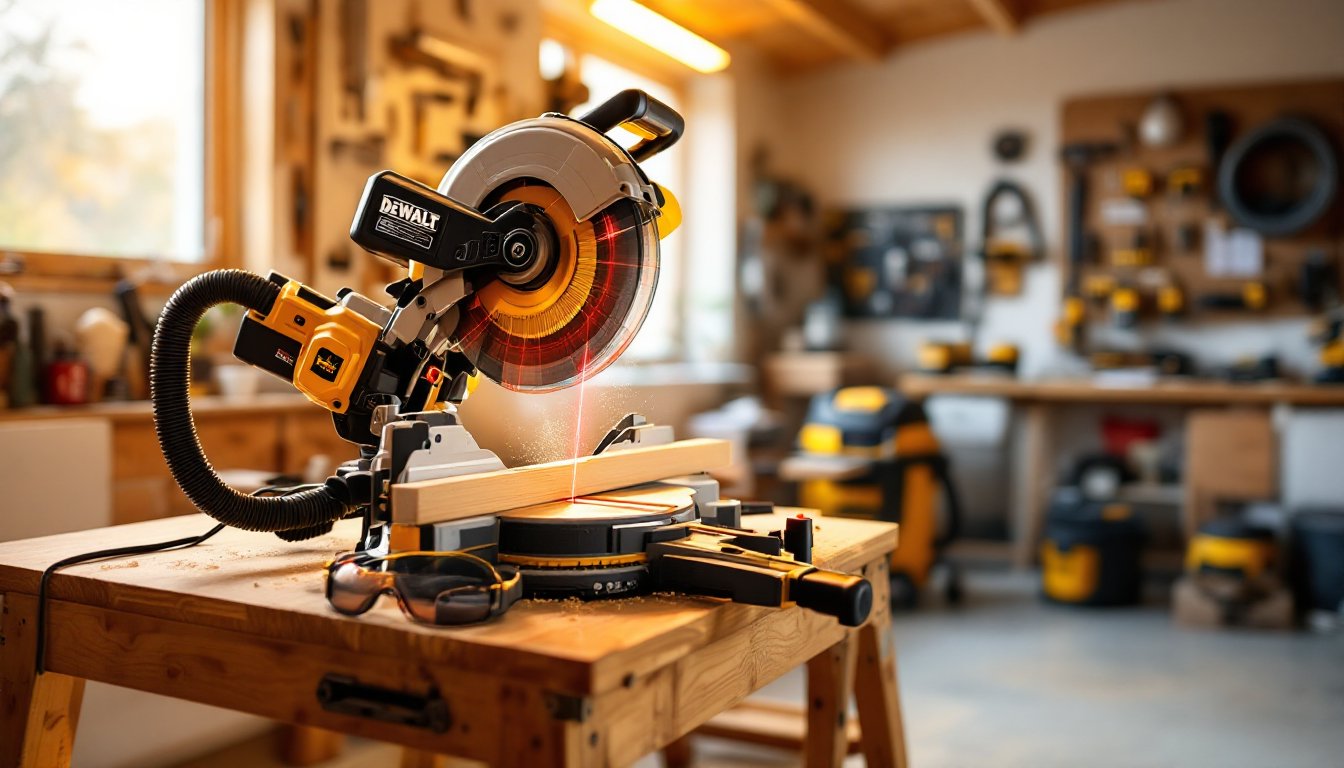
A miter saw is one of the most satisfying tools a DIYer can own, clean crosscuts, precise angles, and the confidence that comes with professional-looking results. Whether you’re building a deck, framing shelving, or cutting trim, a DeWalt miter saw delivers accuracy and durability that homeowners and contractors alike have trusted for decades. With multiple models available, choosing the right one means understanding your project scope, the types of cuts you’ll make, and whether corded power or cordless convenience matters most. This guide walks you through what makes DeWalt stand out, which models fit different budgets and needs, and the essential features to compare before you buy.
Table of Contents
ToggleKey Takeaways
- DeWalt miter saws deliver professional-grade accuracy with features like laser guides and detent stops that make precise crosscuts and angled cuts consistent and reliable for home improvement projects.
- Choose between corded models ($250–$500) for unlimited runtime and cordless options for portability, depending on whether your projects are stationary or involve frequent movement between job sites.
- A sliding compound miter saw extends your cutting capacity to 12–13 inches, making it ideal for wider boards and trim, while standard 12-inch compound models handle most residential shelving and framing work.
- Always prioritize safety by wearing glasses and hearing protection, using clamps instead of hand-holding small pieces, and ensuring the blade stops completely before adjusting your workpiece.
- Regular maintenance—cleaning sawdust, checking blade alignment, replacing dull blades, and proper storage—keeps your DeWalt miter saw performing reliably for decades without major repairs.
Why DeWalt Miter Saws Stand Out for Home Improvement
DeWalt has earned its reputation in the DIY and professional tool market by combining reliability with thoughtful design. Their miter saws typically feature laser guides that cast a line on your workpiece, reducing the guesswork when aligning cuts. The motors are robust, usually in the 10–15 amp range for corded models, giving you enough torque to power through hardwood and composite materials without stalling.
Precision matters when you’re cutting trim or crown molding, and DeWalt’s detent stops (preset angle positions at 0°, 15°, 22.5°, 45°, and other common angles) save setup time and keep your cuts consistent. The bevel adjustment and miter adjustment mechanisms are usually smooth and hold tight, so you won’t have drift mid-project.
Another strength is warranty support and parts availability. DeWalt tools are stocked at most major home centers, and their customer service is responsive if something goes wrong. You’re not hunting obscure replacement parts or dealing with weeks of downtime. That peace of mind matters, especially when you’ve invested $200–$800 in a power tool.
Top DeWalt Miter Saw Models for Different Project Needs
DeWalt’s lineup includes sliding compound saws, standard compound models, and cordless options. A compound miter saw can tilt its blade left and right, letting you cut bevels (angle cuts along the edge of a board) without rotating the workpiece. A sliding compound adds a rail system that pulls the blade forward and back, extending your crosscut capacity significantly, handy for wider boards or trim.
For general DIY work, shelving, trim, basic deck framing, a standard 12-inch compound miter saw like the DeWalt DWS715 or similar mid-range corded model covers most cuts homeowners encounter. These models typically crosscut up to 10–11 inches (nominal lumber width) cleanly.
If you’re working with wider boards, baseboards, or crown molding, a sliding compound saw extends capacity to 12–13 inches, and some models go wider. You’ll pay more ($500–$800), but the accuracy and speed often justify it.
Cordless models using DeWalt’s 20V or FlexVolt battery systems are growing in appeal. They lack the cord tether and are quieter, but runtime depends on battery capacity and the density of material you’re cutting. A single 5.0 Ah battery might give you 30–40 good cuts in softwood before needing a charge.
Corded vs. Cordless Options
Corded saws deliver unlimited runtime and consistent power. Plug in, start working, never worry about a dead battery mid-project. They’re heavier and require a nearby outlet (use a heavy-duty extension cord rated for the tool’s amperage), but they’re reliable workhorses. Most corded DeWalt miter saws in the $250–$500 range are excellent value.
Cordless saws offer mobility and zero cord management. If you’re cutting on a job site without nearby power or moving between rooms, cordless saves frustration. But, battery cost is real, a quality 5.0 Ah battery runs $80–$150, and you may want two so one charges while you work. For casual homeowners doing occasional projects, corded is simpler. For active DIYers or those who value flexibility, cordless makes sense if you already own DeWalt batteries from other tools.
Key Features to Evaluate Before Buying
Before settling on a model, compare these core features:
Blade size and stroke capacity. A 12-inch blade is the standard and handles most residential work. Larger saws (14-inch) cost more and cut thicker material, but they’re overkill for trim and general shelving. A sliding mechanism adds crosscut range, critical if you work with wide boards.
Motor power. Look for 10+ amps on corded models. More amps mean less stalling in hard materials and faster blade spin-up. Cordless saws vary by battery voltage: 20V is fine for light to moderate work, while FlexVolt (60V) systems deliver contractor-grade performance.
Accuracy and alignment features. A laser guide, LED light, and quality fence are must-haves. Recent tools also include pneumatic detent overrides, letting you dial in non-standard angles smoothly. Look for reviews confirming blade alignment stays true after months of use.
Ease of setup and adjustment. Miter and bevel adjustments should feel smooth, not sticky. Check that the fence clamps securely and that dust collection port connections fit standard shop vac hoses (typically 2.5 inches). Dust collection is underrated, a good one keeps your workspace cleaner and helps you see your line better.
Weight and portability. Most compound saws weigh 40–60 lbs. If you’re storing it or moving it between jobs, that matters. Sliding models are heavier: factor that into your setup.
Read reviews focusing on precision after a year or two of use. That’s when quality differences show up, cheap saws drift, good ones hold alignment.
Essential Safety Tips for Operating Your Miter Saw
A miter saw is powerful and fast. Blade speeds typically run 3,500–4,500 RPM, so respect it.
Always wear safety glasses. Sawdust and wood chips fly, and one sliver in the eye derails your whole day. Wear hearing protection, especially if you’re making many cuts, the decibel level builds up fast. If you’re creating a lot of dust, a dust mask or respirator keeps fine particles out of your lungs, particularly important with MDF or other engineered materials.
Never reach under or near the blade while it’s moving. Wait for the blade to stop completely before adjusting the workpiece or cleaning up. Don’t hold small pieces by hand: use a clamp or stop block to secure them.
Keep your work area clear. A clean workspace reduces tripping hazards and lets you focus. Make sure your extension cord isn’t a trip risk, and keep bystanders, kids, and pets away while you’re working.
Check your material and setup before starting. Look for knots, nails, or debris that could cause kickback. Ensure the workpiece is flat and supported on both sides of the cut line. A simple miter saw stand or table ($150–$300) stabilizes your work and makes the tool safer and more enjoyable to use.
Consult the manual for your specific model and local building codes. Safety standards exist for good reason.
Maintenance and Care for Long-Lasting Performance
A well-maintained miter saw lasts for decades. The basics are simple:
Keep it clean. After each use, brush or vacuum sawdust from the blade, fence, and motor vents. Dust buildup restricts airflow and shortens motor life. A dry brush or air blower works fine, don’t use water on power tools.
Check blade alignment regularly. A blade that’s not perpendicular to the fence causes angled cuts and frustration. Most manuals include a simple alignment check using a square or straightedge. If drift develops, refer to the manual’s adjustment procedure, or take it to a service center.
Replace the blade when it dulls. A sharp blade is safer (less likely to bind) and cuts faster. Dull blades cause overheating and motor strain. You can sharpen some blades, but for most DIYers, buying a fresh carbide-tipped blade ($25–$60) is easier. DeWalt and third-party manufacturers sell blades optimized for different materials, framing, finish, or combination cuts.
Lubricate pivot points sparingly. Check the manual for which parts need occasional light oil or grease. Avoid over-lubricating: excess grease traps sawdust and gums up.
Store it dry and protected. Keep your saw in a climate-controlled space if possible. Moisture rusts metal parts and weakens wood components. A basic cover prevents dust accumulation between projects. If you’re storing it long-term, drain fuel from cordless batteries or remove them and store separately in a cool place.
Regular maintenance takes minutes and prevents expensive repairs. Most DIYers who keep their DeWalt saws clean and properly adjusted enjoy years of reliable service without major issues. If something does go wrong, DeWalt’s warranty typically covers defects, and parts are easy to source.
Conclusion
A DeWalt miter saw is an investment in accuracy and durability that pays off on every project. Whether you choose a corded standard compound saw for budget-conscious simplicity or a sliding cordless model for maximum versatility, you’re buying into a tool ecosystem with strong parts support and a track record. Evaluate your primary projects, workspace, and power preferences, then commit to the safety and maintenance habits that keep the saw sharp and yourself safe. Your trim work and crosscuts will look like a professional did them, and that’s worth every penny.