Indoor air quality matters more than most homeowners realize. Dust, pollen, pet dander, and volatile organic compounds (VOCs) accumulate in your home year-round, especially if you live in urban areas or have family members with allergies or asthma. The Levoit Core 300S air purifier offers a straightforward solution for those looking to improve air quality without overhauling their HVAC system or very costly. This guide walks you through what the Core 300S delivers, how it compares to other options, and whether it’s the right fit for your living space.
Table of Contents
ToggleKey Takeaways
- The Levoit Core 300S air purifier combines a three-stage filtration system with smart app controls at an affordable $80–$120 price point, making it an accessible solution for improving indoor air quality.
- With HEPA filtration that captures 99.97% of particles 0.3 microns or larger and activated carbon for odor removal, the Core 300S effectively handles pet dander, pollen, dust, and VOCs in rooms up to 219 square feet.
- Operating quietly at 24 decibels on low speed and using just 25 watts on high, the Levoit Core 300S is ideal for bedrooms and offices where minimal noise and energy efficiency matter.
- Filter replacement costs roughly $50–$70 annually, and regular maintenance of the pre-filter can extend overall filter life and reduce replacement frequency.
- Best suited for allergy sufferers and pet owners in single rooms, the Core 300S proves its value when placed centrally with doors closed, though multiple units may be needed for severe smoke or pet odor issues.
Key Features and Design Overview
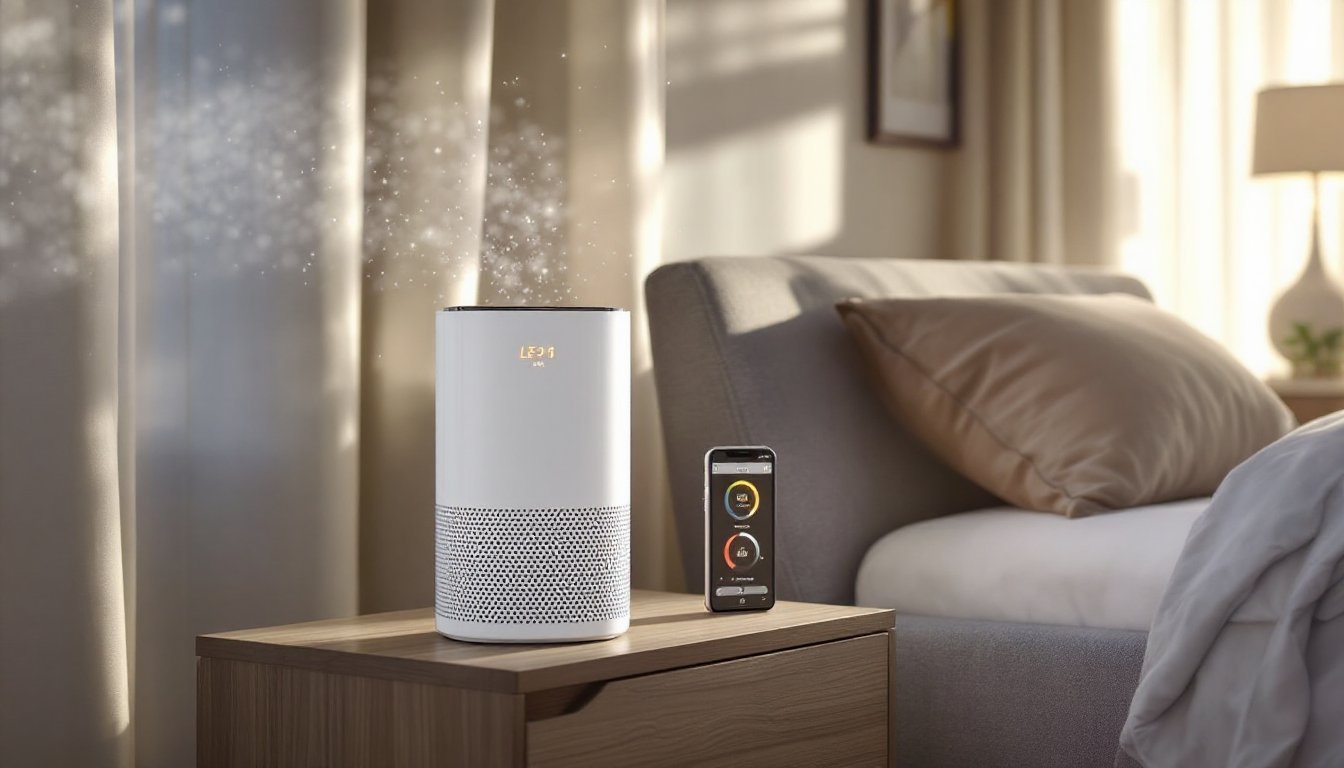
The Levoit Core 300S is a compact, tower-style air purifier designed for living rooms, bedrooms, and home offices. It weighs around 4 pounds and stands roughly 9.8 inches tall, so it fits on nightstands, desks, or corner shelving without dominating the space.
The unit features a smart app integration that lets you control fan speed, set schedules, and monitor filter life from your phone. You can switch between three fan speeds (low, medium, high) or use auto mode, which adjusts fan speed based on real-time air quality. A display panel on the unit itself shows filter status and air quality index (AQI) readings, making it easy to see performance at a glance.
Power consumption is modest, the Core 300S uses around 25 watts on high speed, which won’t noticeably spike your electric bill. The noise levels range from roughly 24 decibels on low (quieter than a whisper) to 50 decibels on high (comparable to a quiet office). For most users, low or medium speed during the day and low speed at night strikes a practical balance between air cleaning and comfort.
Filtration System and Air Quality Performance
The three-stage filtration system is where the Core 300S proves its worth. The pre-filter (foam layer) captures larger particles like pet hair and dust. Below that sits the HEPA filter, which traps 99.97% of particles 0.3 microns or larger, the industry standard for HEPA certification. The third stage is an activated carbon filter that absorbs odors, VOCs, and some chemical pollutants.
This setup handles common household air quality issues: pet odors, cooking smells, mold spores, pollen, and fine dust. If you have severe chemical sensitivities or need to filter formaldehyde from new furniture, the activated carbon layer provides meaningful improvement, though it’s not a substitute for ventilation in cases of heavy off-gassing.
The CADR (Clean Air Delivery Rate) for the Core 300S stands at 141 for smoke, 115 for dust, and 106 for pollen, according to manufacturer specifications. These numbers tell you how fast the unit clears contaminants from the air, higher CADR scores mean faster filtration.
Coverage Area and Room Suitability
The Core 300S is rated for rooms up to 219 square feet with a 5-stage air changes per hour (ACH) at maximum speed. In plain terms: it cycles all the air in a 219-square-foot room through its filters five times per hour on high speed.
For practical application, that covers most standard bedrooms (12×15 feet), living room areas, or home offices. If your room is larger or you want faster cleaning (and don’t mind fan noise), you’ll need a bigger unit. Place the purifier centrally if possible, not tucked in a corner, to maximize air circulation. Keep it at least 1 foot away from walls and furniture that might block airflow.
Tested data from extended air purifier reviews shows that real-world performance depends heavily on placement and whether doors and windows stay closed during operation. The Core 300S performs as advertised in enclosed rooms but struggles when doors are frequently opened or windows are left wide.
Setup, Operation, and User Experience
Out of the box, assembly takes about 5 minutes. Unbox the unit, remove the pre-filter and HEPA filter from their plastic packaging, insert them into the housing, and you’re ready to plug it in. The filters come pre-installed but wrapped in protective plastic, don’t forget to peel that off, or the purifier won’t work properly.
Download the Levoit app (iOS and Android) to unlock smart features. You’ll connect the purifier to your home WiFi, which requires a 2.4 GHz network (not 5 GHz, this is a common stumbling point). Once connected, you can control the unit remotely, set schedules (useful for turning it on before you arrive home), and receive filter life notifications.
In auto mode, the purifier ramps up fan speed when it detects rising AQI readings and scales back when air improves. This feature saves energy compared to running the unit constantly on high. On low speed, the Core 300S operates quietly enough for bedtime use: on high speed, it’s noticeable but not loud enough to make conversation difficult.
The unit includes a replacement filter kit with two HEPA filters and two activated carbon filters, which is a practical addition that saves you from buying separately right away. Daily operation requires no maintenance, just plug it in and let it run.
Maintenance and Filter Replacement Costs
Filter replacement is where ongoing costs accumulate. The HEPA filter lasts 6 to 8 months under typical use: the activated carbon filter lasts 3 to 6 months depending on odor exposure. Replace both simultaneously or separately, Levoit sells them as a combined replacement pack (around $25–$35 per pack, though prices vary by retailer).
With two filter changes per year at the lower cost estimate, you’re looking at roughly $50 to $70 annually in filter expenses. That’s reasonable compared to larger whole-home systems, though smaller, cheaper purifiers may cost less per year.
Cleaning the pre-filter extends overall filter life. Once a month, remove the pre-filter and vacuum off accumulated dust using a soft brush attachment. A clean pre-filter reduces strain on the HEPA filter, delaying replacement. Never wash the HEPA filter, water damages its fibers and renders it useless.
Monitor the app or display panel for filter life reminders. The unit alerts you when filters approach their end, so you won’t accidentally run expired filters that lose effectiveness.
Comparing Value: Is It Right for Your Home?
The Core 300S costs between $80–$120 depending on sales and retailer. That positions it in the budget-to-mid-range of the air purifier market. Cheaper units ($40–$60) often skip HEPA certification or have weak motor performance: pricier models ($300+) add features like UV light, ionizers, or larger coverage areas that may not benefit most households.
Compared to larger whole-home systems (which cost thousands and require professional installation), the Core 300S is a low-commitment way to test whether air purification improves symptoms like allergies or congestion. If you notice real improvement after a month or two, you can consider upgrading to a larger unit or adding purifiers to other rooms.
According to smart home device evaluations, the Core 300S holds its ground against similarly priced competitors, especially for app integration and quiet operation. A key limitation: it can’t handle severe pet or smoke issues alone, if you have multiple pets or someone smokes indoors, you’ll want a larger CADR or multiple units.
For allergy sufferers, pet owners, or anyone in a dusty climate, the investment often pays off through better sleep and fewer respiratory irritations. For a small apartment with minimal dust or pets, you might find the benefit marginal.
Consider placement carefully. A bedroom use case is strong (nighttime noise management matters, and you spend 7+ hours there). Kitchen or living room placement works well if odors or cooking smoke are concerns. Placing one unit per room beats placing one unit trying to cover your entire home.
Conclusion
The Levoit Core 300S delivers solid air purification for small to medium rooms at a practical price point. Its three-stage filtration, quiet operation, and smart app controls make it accessible for homeowners without technical expertise. Filter costs are manageable, and the footprint is compact enough for any room. If you’re serious about improving indoor air quality without major investment or installation, the Core 300S is worth considering. Start with one unit in your primary living space or bedroom, monitor results, and expand if the benefits justify the cost. As home appliance testing shows, consistent air filtration contributes meaningfully to indoor comfort and health over time.