Smart recessed lighting has evolved from a luxury feature to an accessible upgrade for most homeowners. A 6-inch recessed light, the standard residential trim size that fits standard ceiling cavities, can now dim, change color temperature, and respond to voice commands or smartphone apps. Whether you’re retrofitting a kitchen, refreshing a bedroom, or outfitting a new build, smart 6-inch recessed lighting offers flexibility and ambiance control that standard fixtures simply can’t match. This guide walks you through what sets smart recessed lights apart, how to choose the right system for your home, and what to expect during installation.
Table of Contents
ToggleKey Takeaways
- Smart 6-inch recessed lighting lets you control brightness, color temperature, and scenes via app or voice command, transforming standard fixtures into programmable ambiance systems.
- Dimming smart recessed lights to 50% brightness reduces energy use to roughly 30% of full output, delivering measurable savings on your electric bill.
- Tunable white recessed lights balance cost and functionality, offering color temperature adjustment (2700K–5000K+) without the premium price of RGB color-changing models.
- Retrofit installation for smart recessed lighting typically takes 15–30 minutes per fixture and requires only a compatible smart trim ring, low-voltage wire, and basic tools.
- Layering smart recessed lights with other fixtures and setting different scenes for activities (warm 2700K for dining, cool 5000K+ for task work) creates flexible, designer-quality ambiance.
- Mesh networks with a hub (Zigbee or Z-Wave) prove more reliable in larger homes than WiFi-direct systems, as bulbs relay signals if one goes offline.
What Makes Smart Recessed Lighting Different From Standard Fixtures
Standard recessed lights are simple: you flip a wall switch, and they turn on or off at full brightness. Smart recessed lights do far more. Each fixture contains a small control module, usually housed in the trim ring or in the junction box behind the trim, that lets you control brightness, color temperature, and sometimes even color saturation from an app or voice assistant.
The key difference is the control protocol. Smart lights communicate via WiFi, Zigbee, Z-Wave, or proprietary 2.4GHz mesh networks. This means they need a hub (a small box that plugs into your home’s router or sits on a shelf) or they connect directly to your home WiFi. The bulb or trim itself is smart: the fixture housing remains largely the same as a standard 6-inch recessed housing.
Smartness also brings programmability. Set schedules so lights fade in during mornings or dim automatically at sunset. Create scenes, tap “Movie Night” and all your recessed lights dim to 30% warm color. Pair them with motion sensors so hallway lights activate when you walk past. These features require a compatible app and sometimes a hub, but they transform how you use light throughout your day.
Key Benefits of Upgrading to Smart 6-Inch Recessed Lights
Energy savings tops the list. Smart lights let you run fixtures only when needed, and dimming to 50% brightness cuts energy use to roughly 30% of full output. Over a month of typical evening use in a kitchen or living room, that difference shows up on your electric bill.
Beyond efficiency, there’s convenience and comfort. Imagine walking into a dimly lit kitchen at 6 a.m. without reaching for the wall switch, your phone or a voice command does it. In bedrooms, lights can gradually fade out over 15 minutes when you select a bedtime scene, mimicking natural sleep patterns more gently than a sudden on-off cycle.
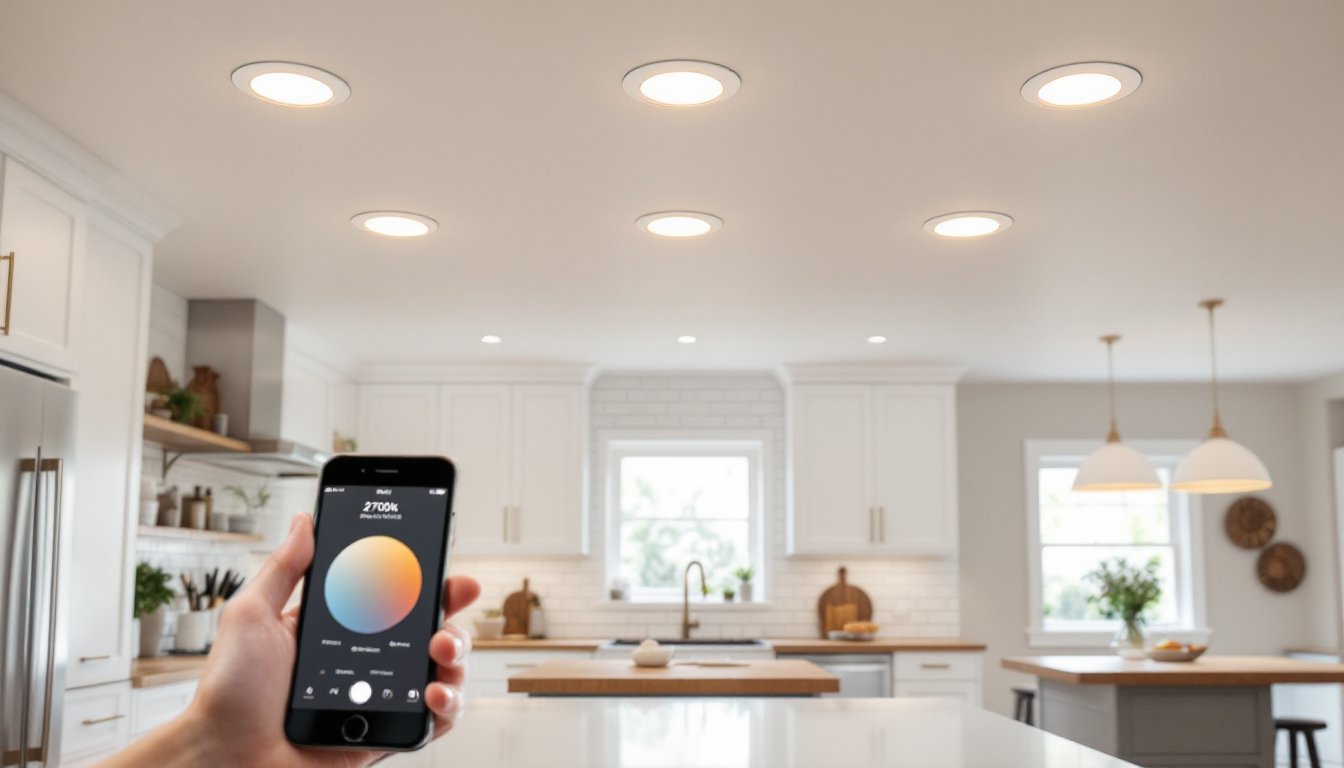
Ambiance control is where smart recessed lights shine. Standard fixtures lock you into one brightness and color. Smart fixtures let you adjust color temperature from warm (2700K, resembling incandescent) to cool daylight (5000K+), or for some RGB models, into full color ranges. A dinner party calls for warm, dimmed light: focus work needs bright, cool light. One fixture, endless moods.
There’s also safety and security. Schedule lights to turn on when you’re away, a common home automation tactic to simulate occupancy. Motion sensors can illuminate hallways at night, reducing trip hazards without blinding you with full brightness.
Choosing the Right Smart Recessed Lighting System for Your Home
Picking a smart recessed lighting system means considering three main factors: ecosystem compatibility, cost, and features.
Ecosystem Compatibility and Integration Considerations
Most smart lights plug into either Amazon Alexa, Google Home, Apple HomeKit, or a proprietary app (like Philips Hue or LIFX). Choose based on what you already use. If you own Alexa devices and an Echo hub, Alexa-compatible recessed lights will integrate seamlessly. If you’re Apple-first, HomeKit-certified fixtures maintain stronger privacy and faster local control.
Mesh networks matter too. Zigbee and Z-Wave systems need a hub but create a self-healing network, if one bulb drops offline, others relay the signal. WiFi-direct systems (like many budget options) skip the hub but require your router to reach every fixture. In larger homes, a hub-based mesh network proves more reliable.
Features and Cost Trade-offs
Basic smart recessed lights offer on-off, dimming, and brightness scenes, typically $20–$40 per fixture. Mid-range models add tunable white (adjustable color temperature) for $40–$70 per fixture. Premium RGB models that shift through full colors cost $60–$100+ per fixture.
For most homeowners upgrading a kitchen or living room, tunable white balances cost and functionality. You get the energy savings and ambiance control without the complexity (and higher price) of RGB. But, if you’re design-forward and want theatrical color-changing capability, RGB is worth the premium.
Also check dimmer compatibility. If your ceiling already has a standard dimmer switch, verify the smart fixture works with it, some do, others replace the switch entirely. This affects installation difficulty and cost.
Installation and Setup: What DIY Homeowners Need to Know
Retrofit vs. New Build
Retrofitting smart recessed lights into existing recessed housings is the most common DIY project. You remove the trim and bulb from your current fixture, install the smart trim ring (which often includes an integrated LED), and connect the low-voltage control wires to a hub or junction box. Most retrofits take 15–30 minutes per fixture once you’re comfortable.
New builds are simpler, you install smart housing and trim during rough-in, avoiding the teardown step. Either way, familiarity with your fixture’s wiring and connector types is key.
Materials and Tools
You’ll need:
- Replacement smart trim ring and LED module (matches your fixture’s size, always verify 6-inch aperture before purchasing)
- Low-voltage wire (typically 18-gauge, included with most kits)
- Wire connectors or terminal blocks
- Ladder or step stool
- Needle-nose pliers
- Screwdriver (usually Phillips)
- Wire strippers to expose 1/4 inch of conductor
Most smart recessed lighting kits include detailed wiring diagrams. Philips Hue, LIFX, and similar brands provide clear laminated instructions.
Safety First
Turn off power at the breaker before touching any wiring, always verify the circuit is dead with a non-contact voltage tester ($10–$20). Wear safety glasses in case dust falls from the ceiling cavity. If your retrofit kit requires running new wires through the ceiling cavity, use low-voltage wire rated for in-wall use to avoid fire hazards.
If your home’s electrical code requires a licensed electrician (check with your local building department), hire one. Recessed lighting in some jurisdictions counts as hardwired fixtures requiring permitted work.
Post-Installation Setup
Once hardware is secure, download the manufacturer’s app, create an account, and follow pairing instructions. Most systems scan your home WiFi or Zigbee network, and you’ll add fixtures one by one. Name each room’s lights logically (“Kitchen Overhead,” “Dining Left,” etc.) so voice commands work intuitively. The whole process takes 30–60 minutes for a typical room with 4–6 fixtures.
Design Tips: Creating the Perfect Ambiance With Smart Lighting
Layering light is the designer’s secret. In a single room, use smart recessed lights alongside other fixtures, a pendant over the island, a table lamp in a corner. Set different scenes for each activity. Cooking breakfast? Bright, cool white from all recessed lights. Evening meal? Recessed lights at 60% brightness, warm white, plus the pendant dimmed to accent the space.
Color temperature is more important than color itself for most home spaces. Warm white (2700K–3000K) feels cozy in bedrooms, living rooms, and dining areas. Neutral white (3500K–4100K) suits kitchens and bathrooms. Cool white (5000K+) works for offices and task-focused zones. Tunable white recessed lights let you shift across this range, so avoid over-buying pure cool or pure warm fixtures.
For ambiance, underlight rather than overlight. A room with recessed lights set to 50% brightness often feels more comfortable than one at full 100%. Dimmers (smart or traditional) are your friend.
Consider spacing. A typical room needs recessed lights spaced 4–6 feet apart for even coverage. Too far apart and you’ll see “hot spots” beneath each fixture. Recessed lights on separate circuits or dimming groups also let you control zones, dim the east side in evening as the sun sets, keep the kitchen island bright.
Recent smart home product reviews from Tom’s Guide and home automation comparisons on CNET showcase how tunable white recessed lights work in real kitchens and living rooms. Those reviews offer visual examples of color temperature effects you can reference when designing scenes.
Conclusion
Smart 6-inch recessed lighting is no longer overkill for a home renovation. The technology is mature, reliable, and affordable enough to upgrade a modest room without breaking your budget. Start with one room, a kitchen or primary bedroom, and see how the convenience and ambiance control fit your daily life. From there, expanding to other areas becomes a straightforward retrofit. Pair smart recessed lights with a thoughtful dimming strategy and tunable white color temperature, and you’ve built a flexible lighting system that adapts to how you actually live.