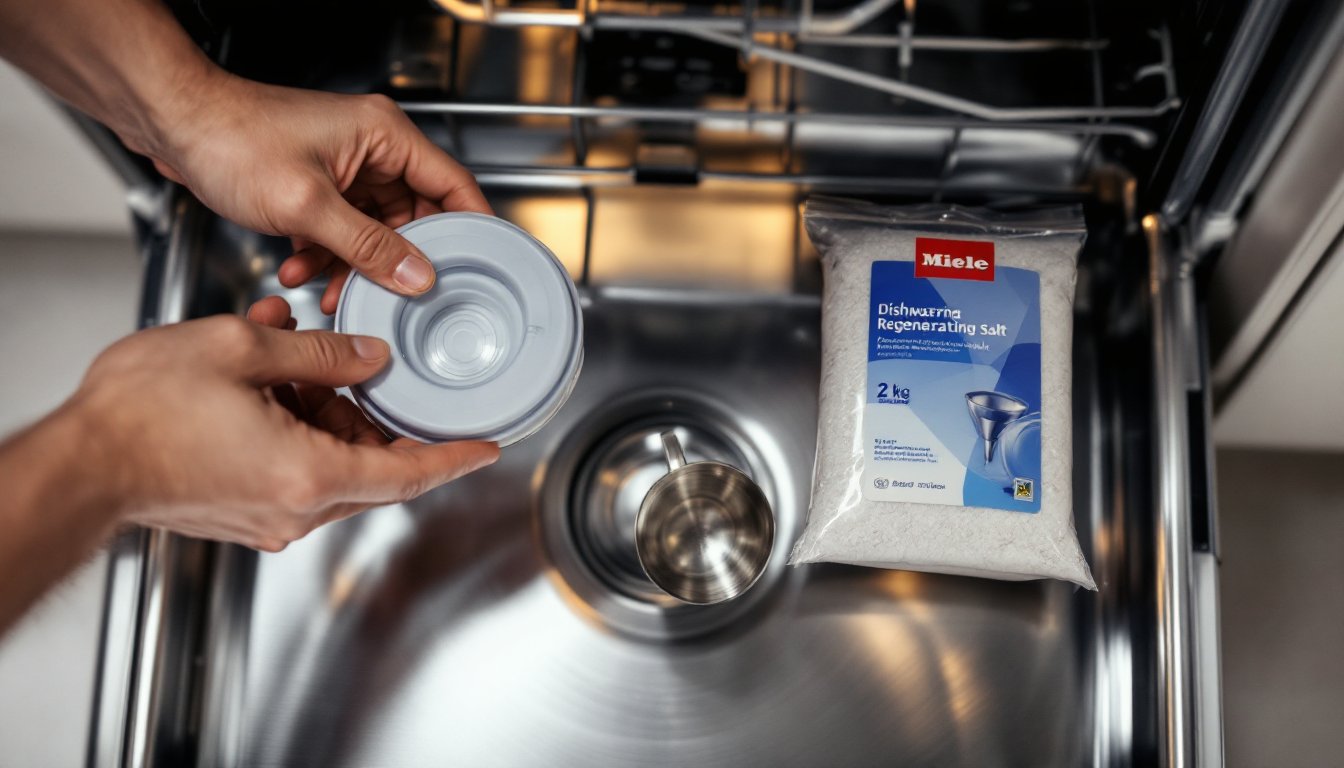
If you own a Miele dishwasher, you’ve probably noticed the salt compartment tucked beneath the rack. Many homeowners overlook this small but crucial component, not realizing that dishwasher salt is the backbone of clean, spot-free dishes and long appliance life. Unlike table salt, dishwasher salt is a specialized product that softens hard water and prevents limescale buildup inside your machine. Without it, your dishes come out cloudy, your dishwasher works harder, and repairs become inevitable. This guide walks you through everything you need to know about Miele dishwasher salt, from understanding why it matters to refilling it correctly and troubleshooting common problems.
Table of Contents
ToggleKey Takeaways
- Miele dishwasher salt is essential for softening hard water and preventing limescale buildup, spots, and cloudy dishes that regular detergent alone cannot prevent.
- Refill your Miele dishwasher salt every 4–6 weeks by unscrewing the reservoir cap, filling it with food-grade dishwasher salt (never table salt), and running a short rinse cycle afterward.
- Adjust your machine’s water hardness setting in the control panel based on your local water quality to optimize salt usage and ensure spotless results.
- If the salt indicator light remains on after refilling, check that the cap is firmly sealed; persistent issues may indicate a stuck float sensor requiring professional service.
- Cloudy or spotted dishes, white crystalline buildup, or salt smells indicate salt depletion, spillage, or improper hardness settings—refill immediately and verify your water hardness level.
- Regular salt maintenance is preventive care that extends appliance life, reduces costly repairs, and ensures clean, spot-free dishes with minimal effort.
What Is Dishwasher Salt and Why Your Miele Needs It
Dishwasher salt is not your kitchen table seasoning. It’s a food-grade, pure sodium chloride (99.8%) product specifically engineered for dishwashing machines. The salt sits in a water-softening resin reservoir inside your Miele and exchanges sodium ions for the calcium and magnesium ions responsible for hard water, the culprit behind spots, film, and premature appliance wear.
Hard water contains minerals that regular detergent can’t fully neutralize. When these minerals remain on dishes and inside the machine, they crystallize into limescale, which clogs spray arms, corrodes seals, and reduces cleaning performance. Your Miele’s water-softening system depends on a continuous supply of salt to regenerate the resin and keep water soft throughout each cycle.
Many homeowners assume dishwasher detergent handles everything. It doesn’t. Detergent cleans: salt softens water and protects your machine. They work together. Without adequate salt, even premium detergent falls short. Regular refilling, typically every 4–6 weeks, depending on water hardness and usage, keeps your Miele running smoothly and your dishes spotless. Regular refilling follows habits that experts recommend to prevent common dishwasher problems and extend appliance lifespan.
How to Refill Salt in Your Miele Dishwasher
Locating the Salt Reservoir
The salt reservoir in a Miele is easy to find once you know where to look. Open the dishwasher door and examine the bottom of the interior, you’ll see a removable cap or knob, usually located toward the front-left or center of the floor. Some models feature a cap labeled with a salt symbol or just a large plastic knob. The reservoir sits directly beneath it, extending downward into the machine’s base.
Before opening, run a short rinse cycle or wipe the interior floor with a dry cloth to avoid water splashing when you unscrew the cap. Moisture around the opening is normal: it indicates the system is working.
Step-by-Step Refilling Process
-
Unscrew the salt cap. Grip the knob firmly and turn counterclockwise. It typically unscrews without tools, though some models may require a quarter-turn twist. Don’t force it, gentle, steady pressure works best.
-
Check the fill level. Peek inside with a flashlight. If you see salt crystals, the reservoir still has supply. If it’s low or empty, proceed to refilling.
-
Prepare the salt. Use only dishwasher-specific salt, sold in major grocery stores and online, typically labeled as regenerating salt or dishwasher salt in 1.5–3 kg (3–6 lb) bags. Do not use table salt, sea salt, or rock salt: they contain anti-caking agents that clog the system.
-
Fill the reservoir. Carefully pour salt directly into the opening using a funnel if needed (prevents spillage). Most reservoirs hold 1–2 kg (2–4 lb) of salt. Fill until salt reaches the opening, you’ll feel slight resistance as crystals settle. Don’t overfill: excess salt spilling into the dishwasher tub can damage seals.
-
Screw the cap back on. Turn clockwise until snug. You’ll hear a slight click or feel it seat securely. Don’t overtighten: this isn’t a lug nut on a tire.
-
Run a short rinse cycle. After refilling, run an empty rinse or short wash cycle. This activates the water-softening system and distributes the salt evenly through the resin bed.
Pro tip: Check your Miele’s water hardness setting in the machine’s control panel. Most models let you adjust it based on your tap water, labeled in degrees of hardness (°dH) or German hardness (°dGH). Higher settings consume salt faster. If you don’t know your water hardness, contact your local water utility or use a test strip from a hardware store. This ensures you’re using the right amount and replacing salt on schedule.
Common Issues and Troubleshooting Tips
Salt indicator light stays on. After refilling, the light should turn off within a few cycles. If it persists, confirm the cap is fully sealed, a loose cap prevents the float sensor from registering salt presence. Remove and reseat the cap firmly, then run a rinse cycle. If the light still won’t clear after a full wash cycle, the float sensor may be stuck: contact Miele service.
Dishes come out cloudy or spotted. This usually means salt is depleted or the hardness setting is too low. Refill the salt immediately and increase the hardness level in the settings menu (consult your manual for exact steps). If the problem persists after refilling and adjusting, you may have an undersized salt reservoir or a malfunctioning softener resin, rare, but worth checking with a technician.
White crystalline buildup inside the machine. This indicates salt has spilled into the tub during refilling or a leak from the reservoir. Stop using the machine and hand-wipe the interior floor to remove loose salt crystals. Run an empty wash cycle on the hottest setting without detergent to rinse away residue. If leaking continues, the cap seal may be worn: replacement caps are inexpensive and available from Miele or appliance retailers.
Salt smell or taste on dishes. Spilled salt during refilling contaminates the wash chamber. Never pour salt directly into the dishwasher tub. Always use the designated reservoir. If you accidentally spilled salt, hand-wipe it out, then run two empty rinse cycles.
Machine stops mid-cycle. Some Miele models have a safety feature that halts operation if salt reaches critically low levels. Refill the salt and restart the cycle. This is rare but indicates you’re running significantly below the recommended fill level.
Performance decline even with regular salt refills. If dishes are still spotty after confirming salt is full and hardness is set correctly, the resin bed may be exhausted (a rare long-term issue, typically after 5+ years of heavy use). You’ll need to contact Miele for resin replacement or full system service. Design resources like The Kitchn and Martha Stewart also offer practical appliance maintenance guides if you need broader dishwasher care strategies.
Conclusion
Miele dishwasher salt is a small investment that pays major dividends, spotless dishes, extended appliance life, and fewer service calls. The refilling process takes just five minutes and requires no special tools. Make it a habit: check the salt indicator monthly, refill every 4–6 weeks, and adjust your hardness setting based on local water quality. Treat salt maintenance the same way you’d treat changing your car’s oil. It’s preventive, affordable, and keeps your Miele running like new for years to come.