If your kitchen lacks built-in dishwasher space, or your lease won’t allow permanent installation, a mobile dishwasher might be the solution you’ve been searching for. A mobile dishwasher is a compact, portable appliance that rolls up to your sink when needed and stores away when not in use, making it ideal for renters, apartment dwellers, and anyone with limited kitchen real estate. With 2026 models offering impressive wash performance and energy efficiency at a fraction of the cost of traditional built-in units, mobile dishwashers have evolved far beyond the basic models of years past. This guide walks you through what to look for, how to set one up, and how to keep it running strong.
Table of Contents
ToggleKey Takeaways
- A mobile dishwasher is a portable, freestanding appliance that connects temporarily to your sink, making it ideal for renters and apartments without permanent installation constraints.
- Modern mobile dishwashers hold 4–6 place settings and offer wash performance comparable to built-in units, with Energy Star–certified models saving $40–60 annually on utilities through lower water and energy consumption.
- Setup requires a simple inlet hose adapter and drain hose placement—verify your faucet type before purchase, as some low-flow or pull-down models may need aftermarket adapters.
- Mid-range mobile dishwasher models ($350–500) with stainless-steel interiors and soil sensors offer better durability and long-term value than budget options, typically lasting 5–7 years versus 2–3 years.
- Essential monthly maintenance—wiping door gaskets, clearing spray arm holes, and checking filters—takes under 10 minutes but extends your mobile dishwasher’s lifespan and preserves cleaning performance.
- Hard-water areas benefit from using rinse aid in every cycle and running monthly vinegar cycles to prevent mineral scale buildup on heating elements and maintain wash quality.
What Is A Mobile Dishwasher And Why You Need One
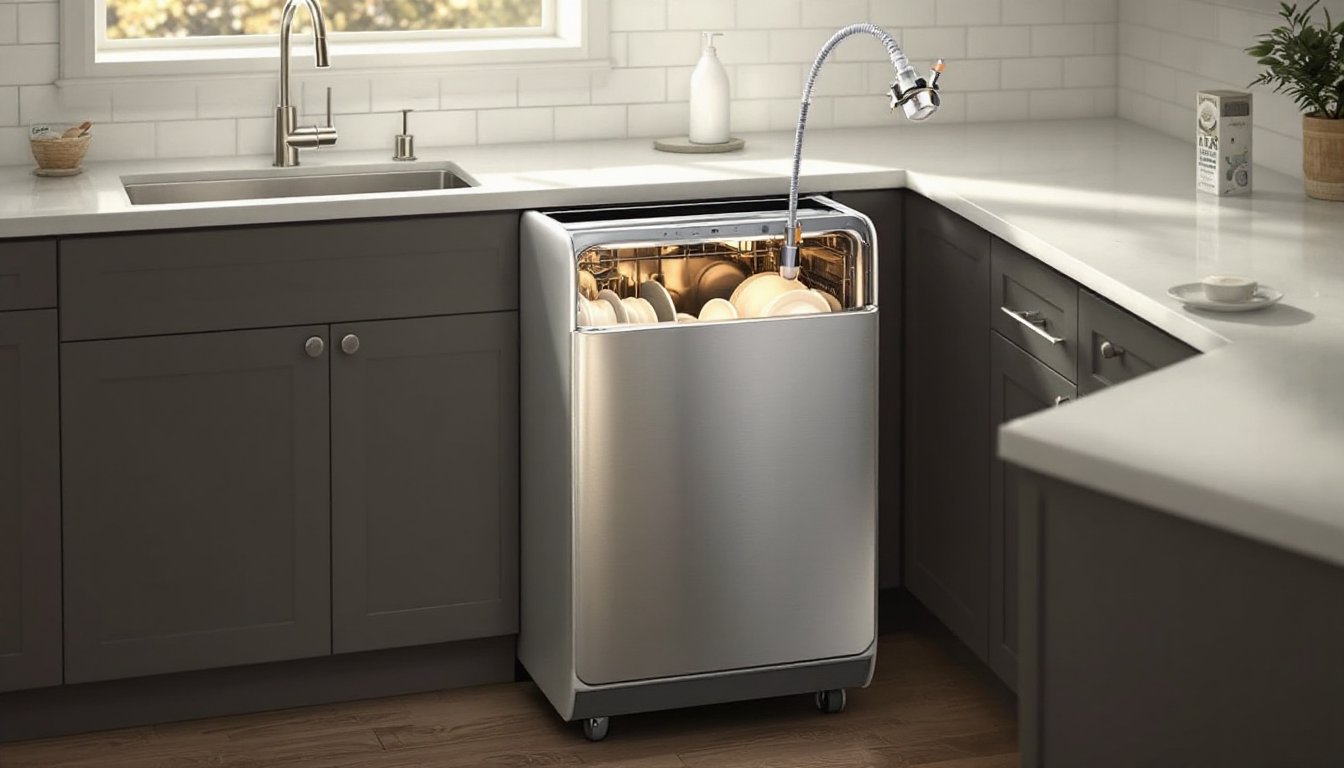
A mobile dishwasher is a freestanding, portable appliance on wheels that connects temporarily to your sink faucet for water supply and drainage. Unlike built-in dishwashers, mobile units require no permanent plumbing modifications, making them perfect for renters or anyone unwilling to commit to kitchen remodeling.
Mobile dishwashers typically measure 18–24 inches wide and fit in tight corners, under counters, or even in a pantry when idle. You wheel them out, connect the inlet hose to your faucet aerator (usually via a simple adapter), place the drain hose into your sink, and run a cycle. When finished, you disconnect and roll it away.
Why consider one? Renters avoid violating lease terms by skipping permanent installation. Small-space dwellers eliminate hand-washing fatigue and reclaim counter and sink time. They’re also a cost-effective test run, if you love the convenience, upgrading to a built-in model becomes an easier decision later. Most modern mobile dishwashers deliver the same wash performance as their built-in cousins, with options for delayed start, soil sensors, and specialized cycles. Products reviewed by cleaning experts in portable dishwashers demonstrate comparable cleaning power to stationary units at a significantly lower price point.
Key Features And Specifications To Compare
Capacity And Wash Cycles
Most mobile dishwashers hold 4–6 place settings per cycle, roughly equivalent to six dinner plates, six bowls, six glasses, and a mix of flatware and serving pieces. A “place setting” is a standard measurement, so don’t assume higher capacity models are dramatically larger: the difference is usually 2–4 additional settings. Place setting count matters less than your actual daily volume: if you’re a household of two eating mostly off small plates and bowls, 4 place settings works fine. Larger families or frequent entertainers should lean toward 5 or 6.
Wash cycles have become more diverse. Standard cycles handle everyday dishes, while intensive cycles tackle baked-on food and heavily soiled pans, critical if you’re hand-washing heavy cookware alongside the dishwasher. Eco or energy-saver cycles reduce water and energy consumption: these run longer but cost less per cycle. Look for a soil sensor that adjusts cycle duration based on how dirty the load is, reducing waste on lightly soiled dishes. Quick-wash cycles (20–30 minutes) exist but don’t deliver deep cleaning, useful for a fast rinse between meals, not a daily workhorse.
Water And Energy Efficiency
Energy Star–certified mobile dishwashers use about 3 gallons of water and 0.8 kWh of electricity per cycle. Non-certified units might use 4–5 gallons and 1+ kWh. Over a year of 5 cycles per week, that difference adds up, certified units save roughly $40–60 annually on utilities, depending on local rates. More importantly, lower water consumption matters if you’re on a well or living in a drought-prone area.
Check the EnergyGuide label on the manufacturer’s website or retailer’s product page: it’ll state annual estimated operating costs. Don’t assume a smaller unit is automatically more efficient: a well-designed compact model may use proportionally more water per load than a larger one. Spray patterns and water pressure inside the unit matter as much as raw water volume, so look for verified consumer reviews or lab tests rather than relying solely on specs. Real Simple’s guides on efficient appliances often include real-world performance notes that manufacturers’ specs miss.
Installation And Setup Requirements
Setup is straightforward, but success depends on having the right adapter and a few minutes of prep. Most mobile dishwashers arrive with an inlet hose and a standard aerator adapter, but verify this before purchase, some budget models skip the adapter, forcing you to buy one separately (usually $10–25).
Before your first cycle, read the manual and locate your faucet type. Standard threaded faucet aerators unscrew easily: pull straight up and counterclockwise, then screw on the dishwasher adapter in its place. Some faucets (low-flow or pull-down models) don’t have removable aerators, which means the inlet hose won’t fit. In that case, you’ll need an aftermarket faucet adapter kit or a splitter valve installed below the sink, doable but adds complexity.
Position the drain hose into your sink or a nearby drain. Many DIYers simply drape it over the sink rim: it works, but a draining cycle creates splashing and noise. Better: secure the hose with a C-clamp or bracket to the sink rim or nearby cabinet to keep it steady and direct water flow down the drain.
Run one cycle without dishes to flush out manufacturing residue and factory dust. Check for leaks at the inlet and drain connections during this test run. Minor drips from the inlet connection tighten with a wrench, don’t overtighten, or you’ll strip the threads. If the drain connection leaks, ensure the hose end fits firmly into the drain or is clamped properly. Some setups benefit from a hose clamp (a $2 metal band tightened with a screw) to secure the drain hose more firmly.
For renters, take photos of the faucet adapter during setup so you know how to reverse it when you move. Landlords rarely object to a mobile dishwasher, but confirming your lease, and leaving no permanent modifications, keeps your deposit safe.
Cost Considerations And Budget Planning
Mobile dishwashers range from $250 to $650 depending on capacity, build quality, and feature set. Budget models ($250–350) hit the basics: 4 place settings, 6–8 cycles, manual controls, and plastic tubs. Mid-range units ($350–500) add stainless-steel interiors (better for durability and noise), soil sensors, delay start, and quieter operation (48–50 dB vs. 52+ dB for budget models). Premium models ($500–650) include extra cycles, touch controls, quieter operation (45–48 dB), and build quality that rivals entry-level built-ins.
Don’t assume the cheapest option is smart on a budget. A plastic-tub unit may rust or crack after 2–3 years of daily use, while a stainless-steel mid-range model lasts 5–7 years comfortably. Over a decade, investing an extra $150–200 upfront often means fewer replacements. But, if you’re testing the waters, renting short-term or unsure about dishwasher convenience, a basic model is a low-risk entry point.
Factor in accessories: inlet hose adapters ($10–25 if not included), a drain hose extension or clamp kit ($15–30), and detergent ($6–12 per box of 25–45 pods). Annual operating costs for Energy Star models run $40–60: add that to your mental math. Most retailers offer standard shipping or in-home delivery: shipping costs $50–100 depending on distance. Some chains waive delivery for purchases over a threshold ($300–500), so factor that into your comparison. A floor model or open-box discount can save 15–25%, but verify the unit powers on and cycles through a test run before leaving the store.
Maintenance Tips For Long-Term Performance
A mobile dishwasher demands minimal upkeep, but skipping maintenance triggers clogs, odor, and reduced performance within months.
Monthly Tasks:
After every cycle, wipe the rubber door gasket with a damp cloth and let it air-dry. Trapped food and detergent residue break down rubber, causing leaks. Check the spray arm holes (spinning nozzles inside the tub) and clear debris with a toothpick if water pressure drops: calcium and food particles clog small holes fast, especially in hard-water areas.
Quarterly Deep Clean:
Run an empty cycle with a commercial dishwasher cleaner (two popular types: acidic rinse aids like Lemi Shine, or enzyme-based cleaners like Affresh). Alternatively, pour two cups of white vinegar into the bottom of an empty tub and run a normal cycle: the acid dissolves mineral buildup and odors. Don’t use both vinegar and commercial cleaner simultaneously, they can neutralize each other.
Quarterly Filter Check:
Mobile dishwashers have a coarse filter trap (usually a plastic cage at the bottom of the tub) that catches food scraps. Pull it out, rinse it under running water, and wipe it clean. A clogged filter prevents water from draining, leaving standing water and odor. This is the single most overlooked maintenance step, do it quarterly without fail.
Hard-Water Considerations:
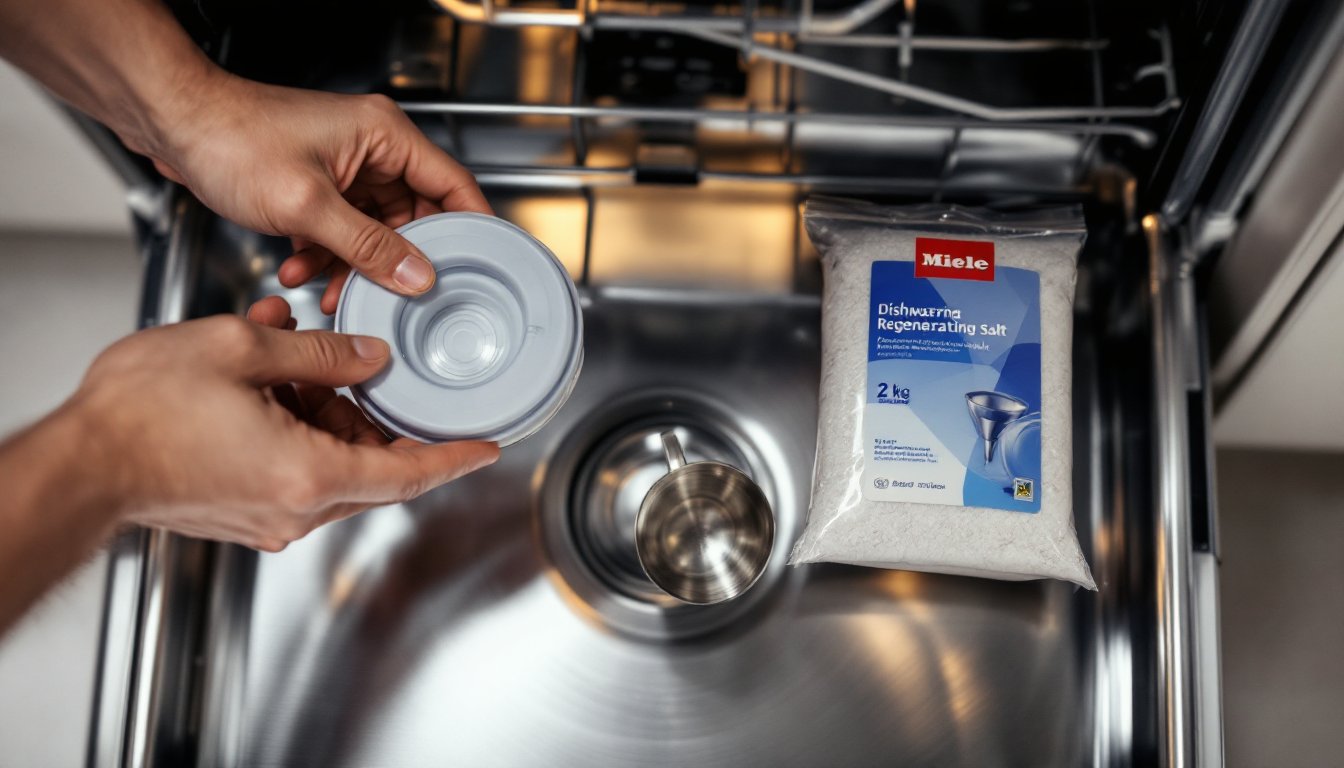
If you have hard water (more than 120 ppm of dissolved minerals), mineral scale builds up on heating elements, reducing wash temperature and energy efficiency. Use a rinse aid (a liquid that improves drying and prevents spots) in every cycle, it also helps dissolve mineral deposits. If scale is heavy after a year, run the vinegar cycle monthly or invest in a whole-home water softener if you’re planning a long stay.
Storage Between Uses:
If you power off the dishwasher for weeks, leave the door ajar to allow interior moisture to evaporate and prevent mold. Before resuming use after an extended shutdown, run an empty cycle with vinegar to sanitize.
These habits, wiping gaskets, clearing spray arms, cleaning filters, and running quarterly vinegar cycles, add no more than 10 minutes per month yet extend your unit’s life by years and preserve wash performance. Kitchen design and appliance guides often highlight how small maintenance habits prevent costly repairs and downtime.