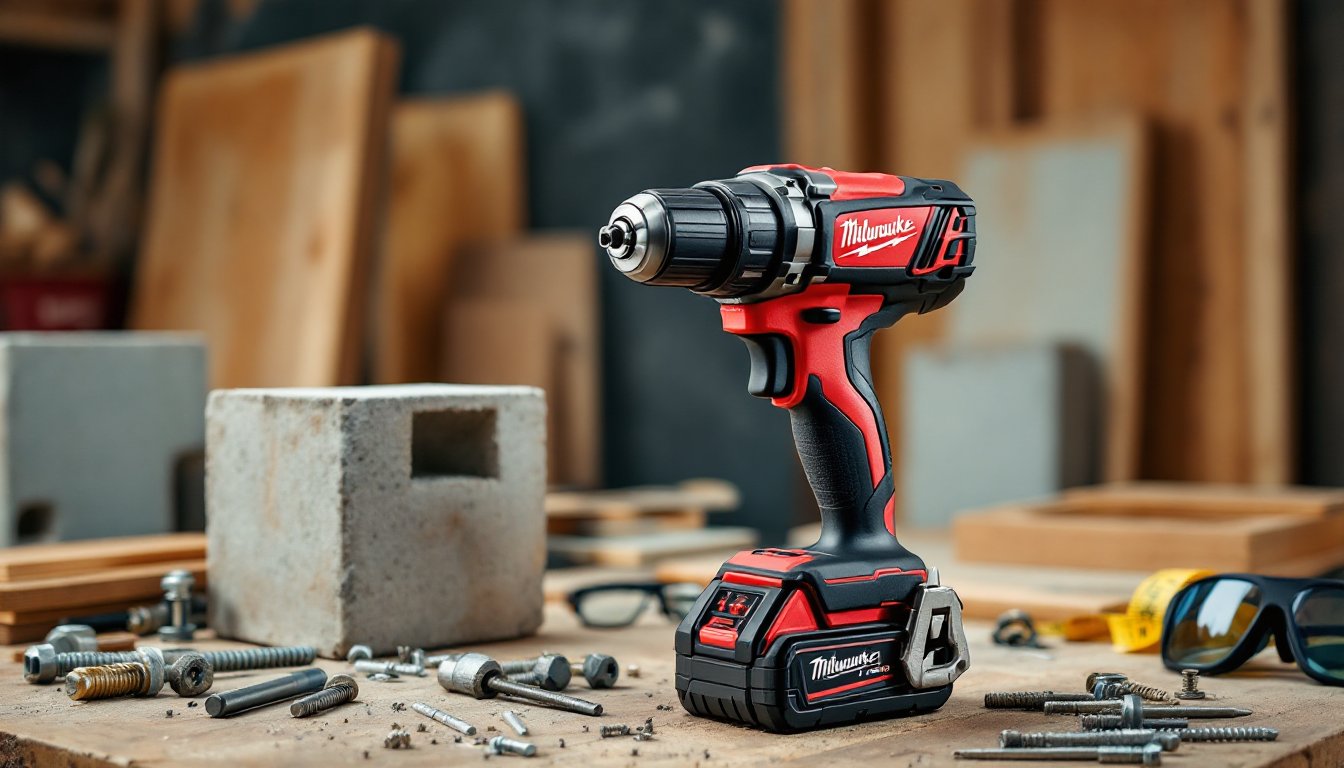
A Milwaukee cordless hammer drill sits on your workbench ready for anything, concrete anchors, lag bolts in stubborn oak framing, or plain old drywall holes that need speed. If you’ve ever fought a corded drill in a tight basement corner or watched a battery die halfway through a project, you know why this tool matters. A quality hammer drill handles both drilling and driving with precision and runtime that keeps you working, not waiting. Whether you’re installing shelving, anchoring a ledger board, or rough-framing a deck, understanding what separates Milwaukee’s lineup from the budget bin helps you pick the right model for your actual work.
Table of Contents
ToggleKey Takeaways
- Milwaukee cordless hammer drills deliver superior reliability and performance through brushless motor technology and REDLITHIUM batteries that maintain steady power output under load, making them ideal for concrete anchors, lag bolts, and structural work.
- Choose between M12 compact models for lighter tasks and M18 1/2-inch models for demanding applications like deck ledger board installation and masonry work—your project scope and existing battery ecosystem determine the right fit.
- Battery runtime depends on capacity (Ah), task intensity, and temperature, so homeowners tackling single projects need one standard battery while contractors working multiple jobs benefit from higher-capacity batteries or backup power.
- The hammer function’s percussion mode is essential for concrete and masonry but should be toggled off for drywall and wood to work efficiently and prevent unnecessary wear on the tool.
- Proper maintenance—keeping the chuck clean, storing batteries in cool conditions (40–60°F), and using material-specific bits—extends tool life and maximizes battery runtime for years of consistent performance.
- A single versatile Milwaukee cordless hammer drill outperforms keeping separate specialized drills for most homeowner projects, saving money and workspace while delivering precision across drilling, driving, and anchoring tasks.
What Makes Milwaukee Cordless Hammer Drills Stand Out
Milwaukee has earned respect on jobsites for build quality and runtime, not marketing. Their cordless hammer drills deliver consistent torque and percussive impact that matters when you’re drilling into masonry or driving fasteners under load. Unlike entry-level brands that bog down halfway through a 2-inch anchor hole, Milwaukee tools maintain speed and power delivery.
The key is their brushless motor technology and battery engineering. A brushless motor runs cooler, lasts longer, and wastes less energy than older brush-style motors. This translates to fewer tool maintenance headaches and better battery efficiency. Milwaukee’s REDLITHIUM batteries use a proprietary chemistry that holds voltage longer under load, you get steady power output instead of the voltage sag that makes a cheap drill feel like it’s dying.
Reliability matters when your project timeline is tight. A tool that stalls under load or quits mid-morning means a trip for batteries, lost momentum, and frustration. Milwaukee’s reputation hinges on consistent performance through a full day’s work.
Key Features to Understand
Power and Speed Capabilities
Milwaukee cordless hammer drills typically come in 1/2-inch and 3/8-inch chuck sizes. The 1/2-inch models pack more torque, the force needed to drive large fasteners or work through dense material, and accept larger-diameter bits. Most M18 and M12 models (referring to battery voltage) deliver between 450 to 550 pounds of torque, enough for structural work like lag bolts in lumber and masonry anchors in concrete.
Speed (measured in rotations per minute, or RPM) varies by model. Many run a two-speed transmission: low speed for high torque (drilling into masonry, driving screws) and high speed for lighter work (pilot holes in softwood). A model with a 0–400 and 0–1,500 RPM range gives you flexibility without forcing you to stall the motor.
The hammer function (percussion) is separate from the rotational speed. It adds impacts per minute (typically 30,000+ IPM) to break through hard surfaces. You toggle this mode on or off depending on the material, drywall and wood work without percussion, but concrete and brick demand it. Knowing when to use each mode keeps you working efficiently and prevents unnecessary wear.
Battery Technology and Runtime
Milwaukee’s battery ecosystem is a strength. Their M18 batteries are cross-compatible across the entire M18 tool lineup, meaning one battery system works in drills, saws, lights, and more. The M12 line offers the same compatibility at a lighter duty level. This matters if you’re building a shop toolkit, buying into one voltage class means batteries compound your investment smartly.
Runtime depends on battery capacity (amp-hours, or Ah) and the task. A 5.0 Ah battery typically runs a drill for several hours of continuous light work, but hammer drilling into concrete can burn a battery faster because the tool works harder. Milwaukee publishes runtime specs, but real-world performance varies with material hardness, fastener size, and ambient temperature (cold slows battery output). A homeowner tackling a weekend project may only need one or two batteries: a contractor running a drill all day needs more capacity in reserve.
Best Uses and Applications for Your Projects
Milwaukee cordless hammer drills excel where speed and power meet precision. Installing a deck ledger board? The hammer function bites through the lag bolts anchoring the ledger to the rim board, while the cordless design lets you work from a ladder without managing a power cord. Hanging a heavy shelf on masonry requires setting concrete anchors, and a hammer drill with percussion makes quick work of the initial holes.
Interior rough-in work, installing electrical boxes, anchoring cabinets, setting drywall anchors, shows where cordless excels over corded tools. You’re not tethered to an outlet, so you move through rooms faster. A homeowner installing or replacing cabinetry can drill pilot holes and drive fasteners without switching tools or hunting for an extension cord.
Masonry and concrete applications are where the hammer function proves its worth. Installing foundation anchors, setting lag bolts in concrete pads, or drilling through concrete block for mechanical fasteners demands that percussion. A standard cordless drill (without hammer mode) will struggle or overheat: the hammer drill distributes the load differently and accepts the punishment.
For lighter tasks, assembling furniture, driving deck screws into pressure-treated lumber, or boring holes in plywood, a hammer drill is overkill, but it still works fine. The real win is having one versatile tool instead of keeping separate drills. Popular Mechanics covers tool selection extensively, and you’ll find that single versatile tools often outperform specialized single-use models for homeowner work.
How to Choose the Right Model for Your Needs
Start by identifying your project scope. If you’re mostly driving fasteners, boring holes in drywall, and light-to-medium assembly work, an M12 compact hammer drill handles it with less weight and bulk. If you’re anchoring deck ledgers, setting lag bolts in rim boards, or doing foundation work, step up to an M18 1/2-inch model. The larger chuck accepts bigger bits, and the extra power reserves make tougher materials feel less like a wrestling match.
Consider your existing Milwaukee ecosystem. If you already own M18 batteries from a saw or other tool, buying an M18 drill means one charging system and interchangeable batteries. If you’re starting fresh, evaluate whether you’ll accumulate more tools over time. A single battery and charger works for one tool: a second tool suddenly makes a 2-battery, dual-charger setup more practical.
Runtime needs matter. A homeowner completing one weekend project can manage with a single standard-capacity battery (3.0–5.0 Ah). A contractor or someone tackling multiple projects back-to-back benefits from higher-capacity batteries or a second battery so one charges while the other works. This Old House’s cordless drill buying guide outlines capacity and runtime considerations in detail.
Handle ergonomics and weight are real. A 1/2-inch drill is heavier than a 3/8-inch model, and you notice after 20 minutes of overhead work. Smaller hands or anyone sensitive to tool weight may prefer the compact M12. Larger fasteners or concrete work demand the M18. Don’t buy the bigger tool because it’s “more capable” if you’ll actually use the smaller one because it’s more comfortable.
Maintenance Tips to Extend Tool Life
Keep the chuck clean. Dust and debris inside the chuck reduce bit grip and cause runout (wobbling), which ruins holes and rounds over fastener heads. A compressed air blow-out after messy projects takes 30 seconds and prevents headaches. Don’t submerge the chuck in water or soak it: a slightly damp rag is fine.
Store batteries in a cool, dry place, not in a hot garage in summer or an unheated shed in winter. Extreme temperatures degrade lithium batteries faster and reduce runtime. Most manufacturers recommend storing batteries between 40°F and 60°F when not in use for extended periods. If you’re winterizing tools for months, partially charge them (around 50%) rather than leaving them fully depleted or fully charged.
Inspect the motor housing and vents regularly. If they’re caked with dust, use compressed air to clear them. A motor that can’t breathe runs hotter and wears faster. Keep the tool dry: cordless tools aren’t waterproof. Today’s Homeowner provides seasonal maintenance checklists that cover tool care alongside other repairs.
Use the correct bits for the material. Masonry bits have a different tip geometry than wood bits: using the wrong type dulls the bit quickly and stresses the motor. Replace dull bits instead of pushing through, you’ll save battery life and get cleaner holes. When the motor starts sounding strained or the tool feels hot, stop and let it cool. Pushing through thermal shutdown wastes battery and risks permanent damage.
Battery maintenance extends runtime years. Don’t leave batteries in the charger constantly once they’re full: over-charging degrades the cells. Most modern chargers prevent this, but unplugging after a full charge is a good habit. Replace batteries when they no longer hold a charge: a $40–$80 battery replacement beats abandoning the entire tool.