If you’ve spotted mud tubes crawling up your foundation or heard soft clicking sounds in your walls at night, you might be facing a termite infestation. Before you panic and call in a pest control crew, consider orange oil termite treatment, a naturally derived option that’s been gaining traction with homeowners looking for alternatives to synthetic pesticides. Orange oil, which contains d-limonene extracted from citrus peels, can be effective for treating drywood termites and some subterranean termite activity. It’s not a whole-house fumigation solution, but for localized infestations caught early, it’s worth understanding how it works and whether it makes sense for your situation.
Table of Contents
ToggleKey Takeaways
- Orange oil termite treatment is a natural, effective option for localized drywood termite infestations, working through d-limonene to disrupt the insect’s exoskeleton and cause dehydration.
- Successful orange oil application requires thorough saturation through multiple treatments over 1-2 weeks, surface preparation to remove paint, and proper ventilation—light spraying alone will not penetrate deep enough to reach termite galleries.
- Orange oil is unsuitable for large structural infestations, subterranean termite problems affecting foundations, or widespread colonies; professional pest control is essential in these cases to avoid costly DIY failures.
- Common mistakes like underapplication, skipping surface prep, and treating without confirming active termite activity are preventable errors that lead to treatment failure and wasted resources.
- Addressing root causes such as moisture, wood-soil contact, and removing nearby firewood or mulch piles is critical to preventing termite return, regardless of whether you use orange oil or professional chemical treatments.
What Is Orange Oil and How Does It Kill Termites?
Orange oil is derived from the peels of citrus fruit and contains a compound called d-limonene, which acts as a natural solvent and insecticide. Unlike broad-spectrum synthetic termiticides, orange oil works primarily as a contact and fumigant agent, it disrupts the termite’s exoskeleton and nervous system on direct contact and can penetrate wood where termites are feeding.
The oil is often sold in concentrate form, which you’ll dilute with water or apply directly to affected wood. Once applied, it spreads through the wood tissue and kills termites both on contact and through exposure in the treated area. The active ingredient breaks down the lipid layer of the insect’s body, essentially dehydrating them.
The Science Behind d-Limonene’s Effectiveness
D-limonene is effective against termites because it dissolves the protective waxy coating on the insect’s exoskeleton, causing them to lose moisture and die. Research has shown it’s particularly effective against drywood termites, which stay inside wood and don’t require soil contact like subterranean termites do. The compound is also biodegradable and breaks down in sunlight and soil relatively quickly, leaving no long-term residue, a key reason homeowners prefer it to synthetic alternatives.
But, effectiveness depends heavily on concentration, application method, and how thoroughly the product saturates the infested wood. A light spray won’t penetrate deep enough: you need sustained saturation to reach termite galleries buried inside the wood.
Signs Your Home Has a Termite Infestation
Before treating anything, confirm you actually have termites. Misdiagnosing the pest wastes time and money.
Visual signs include:
- Mud tubes on exterior walls, foundations, or crawl spaces (subterranean termites build these shelter tubes)
- Wood damage that follows the grain, creating a hollowed-out appearance with thin, papery walls between galleries
- Frass (termite droppings), which look like fine sawdust or sand near infested wood or exit holes
- Discarded wings near doors, windows, or light sources during swarming season (spring and early summer)
- Soft, deteriorating wood that sounds hollow when tapped with a screwdriver
Sound is another clue: soldier termites make clicking or tapping noises when disturbed inside walls. If you hear that along with other signs, you likely have an active infestation.
Spot treatments like orange oil work best on drywood termites in localized areas. If you suspect a widespread subterranean termite problem affecting the foundation or structural members, this calls for a professional inspection and possibly a licensed pest control company. Orange oil isn’t a substitute for structural fumigation or perimeter soil treatments, which are the only reliable way to handle large infestations.
How to Apply Orange Oil Termite Treatment Safely
Orange oil application is straightforward but demands patience and precision. You’re aiming for saturation, not just a surface coat.
What you’ll need:
- Orange oil concentrate (or a pre-mixed ready-to-spray product)
- Pump sprayer or injector applicator (depends on whether you’re treating exterior or interior galleries)
- Protective equipment: nitrile gloves, safety glasses, and a respirator if spraying in enclosed spaces (orange oil is natural, but inhaling mist isn’t ideal)
- Drill with a small bit (if injecting into hidden galleries)
- Drop cloths or plastic sheeting to protect flooring and surrounding surfaces
Step-by-step process:
- Locate infested wood using a moisture meter and visual inspection. Mark galleries, mud tubes, or damaged areas clearly.
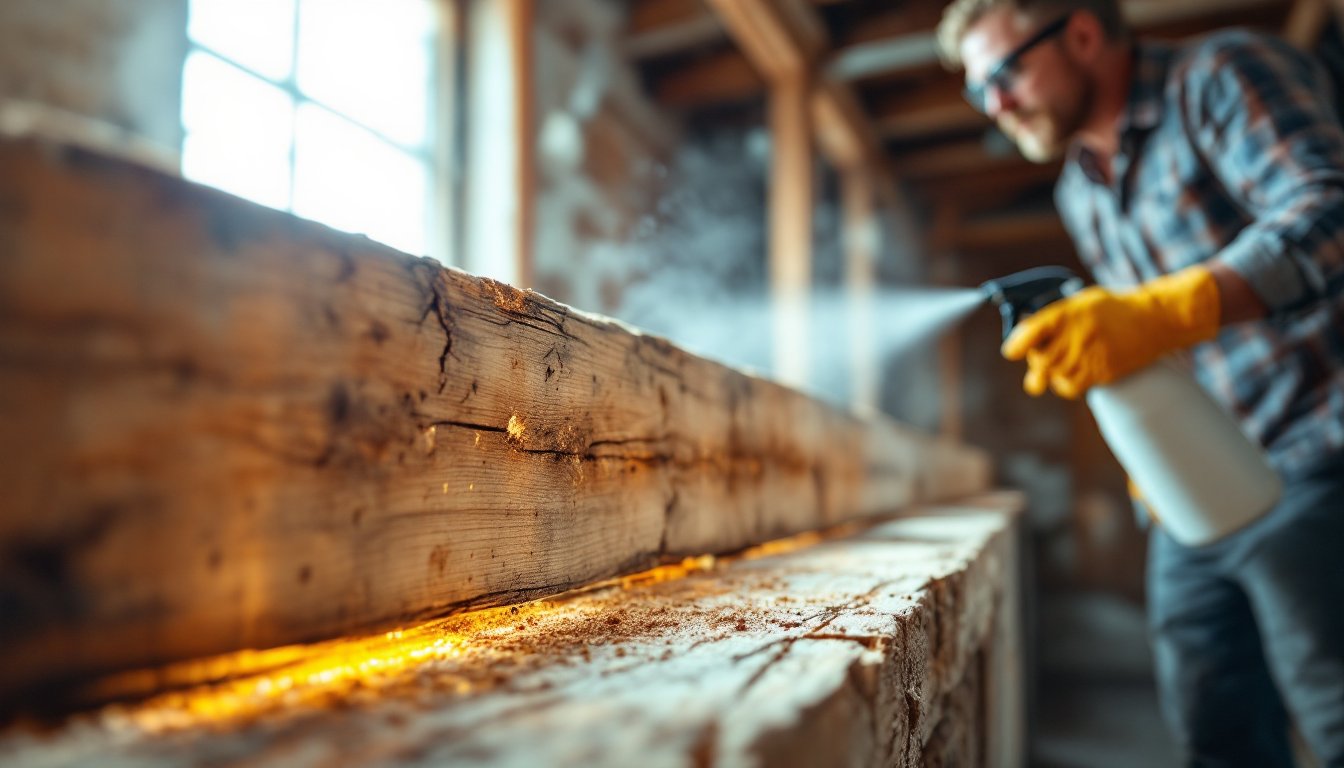
- Prepare the area by removing paint or finish over the infestation so the oil can penetrate the wood directly. A paint scraper or wire brush works: you don’t need perfection, just exposed wood.
- Dilute the concentrate according to product instructions (typically 1:1 or 1:2 ratio with water, but check your specific product).
- Apply using injection or spray: For galleries you can access, spray generously and repeatedly, letting the oil soak in. For hidden galleries, drill small holes (1/4-inch) every 12 inches into the wood, then inject the orange oil solution using a caulk gun applicator or pump.
- Repeat applications are often necessary, treat the same area 2-3 times over 1-2 weeks to ensure saturation and catch emerging termites.
- Monitor for activity over the next 2-4 weeks. If you see fresh frass or new mud tubes, you may need additional treatments or professional intervention.
Safety note: Work in a well-ventilated area. If treating interior walls, open windows and doors. Orange oil can irritate skin and eyes, so gloves and glasses are non-negotiable. Avoid spraying near electrical outlets or wiring.
Orange Oil vs. Chemical Treatments: Which Is Right for Your Home?
Orange oil has real advantages, but it’s not a universal fix. Understanding the trade-offs helps you make the right call.
Orange oil strengths:
- Natural, biodegradable compound with no synthetic pesticide residue
- Low toxicity to humans and pets when applied as directed
- Effective for localized drywood termite infestations
- No wait time for occupancy after application (you can return immediately)
- Lower upfront cost for DIY treatment
Orange oil limitations:
- Works best on accessible infestations: hard to reach galleries inside walls need professional injectors
- Doesn’t create a lasting barrier like soil termiticide treatments do
- Requires multiple applications and hands-on monitoring
- Not suitable for large, structural infestations
- Effectiveness is highly dependent on saturation, light applications often fail
Synthetic chemical treatments (applied by licensed professionals) offer broader coverage, longer residual protection, and are proven for heavy infestations affecting structural members. They typically cost more but provide a guarantee and ongoing monitoring. The trade-off is chemical residue and a waiting period before re-entry to treated areas.
For small, localized drywood termite problems, like a few tubes on an exterior wall or damage in a windowsill, orange oil makes sense. For anything touching the foundation, affecting multiple rooms, or involving subterranean termites, hire a professional. Trying to DIY a large problem with orange oil often fails, costing you more in the long run.
Common Mistakes to Avoid When Using Orange Oil
Most DIY orange oil failures come from these preventable errors.
Underapplying the product. One spray and you’re done, wrong. Orange oil must saturate the wood to reach termites deep in galleries. Plan on multiple applications over 1-2 weeks, spraying until the wood glistens and no longer absorbs liquid immediately.
Skipping surface prep. Paint, stain, or finish blocks penetration. If you don’t scrape away the coating over infested wood, the oil sits on top and evaporates rather than soaking in. Spend the time: it makes the difference between success and wasted effort.
Mistaking the termite type. Orange oil is really only effective for drywood termites. If you have subterranean termites (which need soil contact and form mud tubes), orange oil won’t stop them from re-entering your home. You need a soil termiticide barrier for that.
Treating without confirming the infestation. Don’t assume termites based on old damage or a single mud tube. Termite spot treatments work only if you’re actually treating active termites. If the colony is gone, you’re just wasting product and delaying real solutions.
Ignoring wood source locations. Termites enter homes through mulch, firewood piles, and stored lumber against the house. Treating infested wood indoors but leaving conducive conditions outside means they’ll come back. Move wood piles away from the foundation, reduce mulch depth near siding, and fix moisture issues.
Not following safety guidelines. Wear gloves and eye protection every time. If you’re injecting into walls, wear a respirator. Orange oil is natural, but it’s still a solvent and can cause skin irritation or respiratory discomfort in poorly ventilated spaces.
Conclusion
Orange oil termite treatment is a legitimate option for homeowners dealing with small, localized drywood termite infestations. It’s natural, safe for your family, and avoids synthetic chemicals, but only if you apply it thoroughly and monitor results. If your infestation is large, structural, or involves subterranean termites, don’t gamble with a DIY approach: bring in a licensed professional. Either way, address the root causes, moisture, wood-soil contact, and nearby wood debris, or termites will return regardless of treatment method.